Dozens of companies and government agencies throughout the world are heavily involved in developing wireless charging of batteries in electric buses & light rail vehicles.
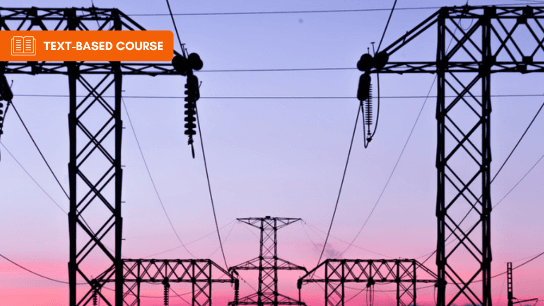
At the present time, dozens of companies and government agencies throughout the world are heavily involved in developing wireless charging of batteries in electric buses and light rail vehicles.
The attractions of wireless power transfer (WPT) are manifold:
Topics: Learning about WPT technology options, especially inductive power transfer; Becoming familiar with notable and successful WPT projects; Understanding the advantages of WPT systems; Learning about safety and health concerns related to electric and magnetic fields produced by WPT technology; Understanding readiness levels of various versions of the technology; Understanding proposed safety standards; and Learning about existing information on reliability under real-service conditions.
Intended Audience: This course is intended for electrical, mechanical, civil, and transportation engineers concerned with the introduction of wireless power transfer technologies in electric vehicles.
Publication Source: This course is based on the U.S. Department of Transportation Federal Transit Administration (FTA Report No. 0060 of August, 2014).
Civil Engneering faculty member for 27 years
Dr. Rossow is a graduate of the University of Michigan with B.S., M.S., and Ph.D. degrees. He is a licensed Professional Engineer in the State of Illinois. He taught civil engineering for over 35 years, including six years at Washington University in St. Louis and 29 years at Southern Illinois University Edwardsville, where he was the Chair of the Civil Engineering Department for ten years. His areas of expertise are in civil engineering and mechanics. He has consulted for various organizations, including government agencies and an international offshore drilling company. He has published numerous technical journal articles and technical reports for a variety of governmental agencies and private sector organizations. Mark P. Rossow, PE, PhD Licensed Professional Engineer in State of Illinois License No. 062.040560 Dr. Rossow is a graduate of the University of Michigan with B.S., M.S., and Ph.D. degrees. He taught civil engineering for over 35 years, including six years at Washington University in St. Louis and 29 years at Southern Illinois University Edwardsville, where he was the Chair of the Civil Engineering Department for ten years. His areas of expertise are in civil engineering and mechanics. He has consulted for various organizations, including government agencies and an international offshore drilling company. He has published many journal articles and technical reports.
This portal is provided as a training and development resource for City of Markham employees. Every course is delivered by a qualified subject matter expert or learning organization, is quantifiable in hours, and is verifiable — you receive a documented certificate of completion for every course you finish, stored on LearnFormula indefinitely.
If you hold a professional designation (for example in engineering, accounting, human resources, or law), courses may be counted as professionally relevant, verifiable learning activities toward your continuing professional development. Individual practitioners are responsible for confirming that an activity meets the requirements of their professional body. For questions about the City of Markham's training and development policies, please speak with your people leader or Human Resources.
