Intended Audience: This course is intended for civil and transportation engineers and planners concerned with the funding of future transportation needs.

In this online engineering PDH course, the feasibility of using Vehicle Mileage (VM) fees as a funding mechanism to meet long-term transportation needs is discussed. Transportation officials are becoming increasingly concerned about the fuel tax’s ability to continue funding transportation development adequately. As currently applied, the tax generates revenue in proportion to fuel consumption, not actual road use. But as vehicles become more fuel efficient, revenue per mile traveled decreases, and the fuel tax’s ability to fund infrastructure development is in doubt. VM fees, on the other hand, offer an income stream that is independent of vehicle fuel efficiency and grows directly with road use.
This course a) presents the case for pursuing VM fees, b) describes the obstacles that may prevent the implementation of such fees, and c) discusses the idea of a trial deployment of vehicle mileage fees, focusing entirely on fully electric vehicles that will soon appear on the market. This vehicle class represents a small percent of the vehicle fleet and would constitute a class of vehicles that falls outside the existing fuel tax collection system and hence pay no direct road user fees except vehicle registration.
The course is based on a study of the possibility of introducing VM fees in the State of Texas, but the study findings are generally applicable to other jurisdictions as well.
Topics: Domestic studies International applications Technology issues Administrative issues Public acceptance Odometer reading-based model Cellular/Zone-based model GPS-based facility specific model Potential applications of vehicle mileage fees Addressing public acceptance barriers
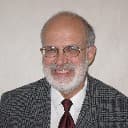
Civil Engneering faculty member for 27 years
Dr. Rossow is a graduate of the University of Michigan with B.S., M.S., and Ph.D. degrees. He is a licensed Professional Engineer in the State of Illinois. He taught civil engineering for over 35 years, including six years at Washington University in St. Louis and 29 years at Southern Illinois University Edwardsville, where he was the Chair of the Civil Engineering Department for ten years. His areas of expertise are in civil engineering and mechanics. He has consulted for various organizations, including government agencies and an international offshore drilling company. He has published numerous technical journal articles and technical reports for a variety of governmental agencies and private sector organizations. Mark P. Rossow, PE, PhD Licensed Professional Engineer in State of Illinois License No. 062.040560 Dr. Rossow is a graduate of the University of Michigan with B.S., M.S., and Ph.D. degrees. He taught civil engineering for over 35 years, including six years at Washington University in St. Louis and 29 years at Southern Illinois University Edwardsville, where he was the Chair of the Civil Engineering Department for ten years. His areas of expertise are in civil engineering and mechanics. He has consulted for various organizations, including government agencies and an international offshore drilling company. He has published many journal articles and technical reports.
This portal is provided as a training and development resource for City of Markham employees. Every course is delivered by a qualified subject matter expert or learning organization, is quantifiable in hours, and is verifiable — you receive a documented certificate of completion for every course you finish, stored on LearnFormula indefinitely.
If you hold a professional designation (for example in engineering, accounting, human resources, or law), courses may be counted as professionally relevant, verifiable learning activities toward your continuing professional development. Individual practitioners are responsible for confirming that an activity meets the requirements of their professional body. For questions about the City of Markham's training and development policies, please speak with your people leader or Human Resources.
