Discover how to leverage urban trees and soil systems as green infrastructure to effectively manage runoff and maximize hydrological benefits.
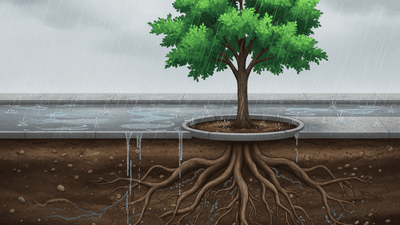
This two-hour course explores the strategies and techniques design professionals can use to manage stormwater with trees.
The course will begin with an explanation of the causes and harms of stormwater runoff, how infiltration and retention are used as solutions, and the roles of trees in reducing runoff.
The course will then discuss using urban forests for stormwater management, tree selection and placement, and design failures. Lastly, the course will identify and explain advanced techniques related to green stormwater management.
This course covers the following key topics:
This content is essential for civil engineers, landscape architects, urban planners, and municipal officials looking to implement sustainable, cost-effective stormwater strategies. By prioritizing soil volume and understanding tree biology, professionals can design infrastructure that supports mature tree growth, reduces runoff, and creates resilient urban ecosystems.

Online Courses for Engineers
HalfMoon Education is a nonprofit continuing education provider offering live webinars and on-demand courses for engineers, architects, landscape architects, land surveyors, attorneys, paralegals, accountants and others. Since 1996, we’ve helped thousands of professionals nationwide stay current with industry standards and codes, earn CE hours, and advance their expertise through practical, expert-led learning experiences. Learn more about us at: www.halfmoonseminars.org

ISA Board Certified Master Arborist (#OH 6319B); ISA Tree Risk Assessment Qualified (TRAQ); Consultant, Lecturer, Author and Trainer
Mr. Palmer is a Board Certified Master Arborist® and Tree Risk Assessment Qualified by the International Society of Arboriculture, and a Consulting Arborist. He was the owner of a premium services landscaping company for 20 years. Mr. Palmer’s focus is on trees in urban and construction environments, soil deficiencies, and the importance of soils for sustainable mature trees, increasing urban tree canopies by ensuring trees live to maturity and unsustainable landscape designs. He does tree assessments for individuals, commercial clients, law firms, insurance companies, municipalities, landscape architecture firms, parks, and woodland management agencies, and has assessed and evaluated thousands of individual trees in the past decade.
This portal is provided as a training and development resource for City of Markham employees. Every course is delivered by a qualified subject matter expert or learning organization, is quantifiable in hours, and is verifiable — you receive a documented certificate of completion for every course you finish, stored on LearnFormula indefinitely.
If you hold a professional designation (for example in engineering, accounting, human resources, or law), courses may be counted as professionally relevant, verifiable learning activities toward your continuing professional development. Individual practitioners are responsible for confirming that an activity meets the requirements of their professional body. For questions about the City of Markham's training and development policies, please speak with your people leader or Human Resources.
