Intended Audience: for civil, hydraulic, and geotechnical engineers concerned with issues of streambank and shoreline protection.
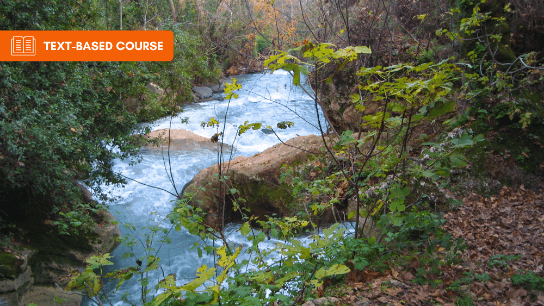
Streambank and shoreline protection consists of restoring and protecting banks of streams, lakes, estuaries, and excavated channels against scour and erosion. In the past, many organizations involved in water resource management have preferred to use engineered structures to provide protection. Today, engineered structures often remain as viable options, but as part of the present-day recognition of the need to promote sustainability and diversity in natural systems, engineers should seriously consider methods that are sustainable and that restore ecological functions and natural habitats.
This course discusses traditional engineered structures but, in addition, discusses soil bioengineering approaches to protection. Soil bioengineering consists of using living woody plant materials as structural components to provide soil protection and reinforcement.
The course discusses the attributes and limitations of both approaches and contains recommendations about which approach is most appropriate for achieving a given protection goal. Instances in which soil bioengineering can be combined with engineered structures are also discussed. Practical design considerations, construction techniques, and guidelines for the selection of appropriate materials are presented.
Topics: Planning and selecting streambank and shoreline protection measures Design considerations Soil bioengineering approaches such as live staking, live fascines, brushlayers, branchpacking, live cribwalls, vegetated rock gabions, joint plantings, and brush mattresses, and dormant post plantings Structural approaches such as tree or brush revetments; log, rootwad and boulder revetments; piling revetment with wire or geotextile fencing; jacks; rock riprap; groins; bulkheads; coconut fiber rolls; stream jetties; and barbs Applications and effectiveness of each technique Construction and installation guidelines for each technique
Intended Audience: for civil, hydraulic, and geotechnical engineers concerned with issues of streambank and shoreline protection.
Civil Engneering faculty member for 27 years
Dr. Rossow is a graduate of the University of Michigan with B.S., M.S., and Ph.D. degrees. He is a licensed Professional Engineer in the State of Illinois. He taught civil engineering for over 35 years, including six years at Washington University in St. Louis and 29 years at Southern Illinois University Edwardsville, where he was the Chair of the Civil Engineering Department for ten years. His areas of expertise are in civil engineering and mechanics. He has consulted for various organizations, including government agencies and an international offshore drilling company. He has published numerous technical journal articles and technical reports for a variety of governmental agencies and private sector organizations. Mark P. Rossow, PE, PhD Licensed Professional Engineer in State of Illinois License No. 062.040560 Dr. Rossow is a graduate of the University of Michigan with B.S., M.S., and Ph.D. degrees. He taught civil engineering for over 35 years, including six years at Washington University in St. Louis and 29 years at Southern Illinois University Edwardsville, where he was the Chair of the Civil Engineering Department for ten years. His areas of expertise are in civil engineering and mechanics. He has consulted for various organizations, including government agencies and an international offshore drilling company. He has published many journal articles and technical reports.
This portal is provided as a training and development resource for City of Markham employees. Every course is delivered by a qualified subject matter expert or learning organization, is quantifiable in hours, and is verifiable — you receive a documented certificate of completion for every course you finish, stored on LearnFormula indefinitely.
If you hold a professional designation (for example in engineering, accounting, human resources, or law), courses may be counted as professionally relevant, verifiable learning activities toward your continuing professional development. Individual practitioners are responsible for confirming that an activity meets the requirements of their professional body. For questions about the City of Markham's training and development policies, please speak with your people leader or Human Resources.
