This course provides a basic introduction to classical thermodynamics.
This course provides a basic introduction to classical thermodynamics. Fundamental concepts are defined and then used to state the First and Second Laws of Thermodynamics and the ideal gas laws. The laws are then illustrated through applications to various practical steady-state engineering systems. This course would be of interest to persons needing to review fundamental thermodynamic concepts and applications or to learn them for the first time.
Topics: Isolated, closed, and open systems; work and heat; pressure, temperature, enthalpy, entropy, specific volume, and their relations as expressed in steam tables; cyclic, reversible, irreversible, adiabatic, and isentropic processes; Carnot cycle, Carnot efficiency, and Rankine cycle. Characteristics of property diagrams such as saturation, superheated, critical point, and quality Identification of the properties of a thermodynamic system Use of steam tables/property diagrams to relate the various properties to each other Identification of the basic thermodynamic concepts to be used in the analysis of particular engineering components The First and Second Law of Thermodynamics and the ideal gas laws and how to apply them to the analysis of practical engineering thermodynamic systems such as pumps, turbines, condensers, and heat exchangers
Intended Audience: for civil, construction, structural, nuclear, and mechanical engineers working with equipment for power generation, energy conversion, heat transfer, fluid flow, and process manufacturing.
Publication Source: US Dept. of Energy
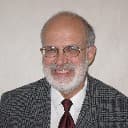
Civil Engneering faculty member for 27 years
Dr. Rossow is a graduate of the University of Michigan with B.S., M.S., and Ph.D. degrees. He is a licensed Professional Engineer in the State of Illinois. He taught civil engineering for over 35 years, including six years at Washington University in St. Louis and 29 years at Southern Illinois University Edwardsville, where he was the Chair of the Civil Engineering Department for ten years. His areas of expertise are in civil engineering and mechanics. He has consulted for various organizations, including government agencies and an international offshore drilling company. He has published numerous technical journal articles and technical reports for a variety of governmental agencies and private sector organizations. Mark P. Rossow, PE, PhD Licensed Professional Engineer in State of Illinois License No. 062.040560 Dr. Rossow is a graduate of the University of Michigan with B.S., M.S., and Ph.D. degrees. He taught civil engineering for over 35 years, including six years at Washington University in St. Louis and 29 years at Southern Illinois University Edwardsville, where he was the Chair of the Civil Engineering Department for ten years. His areas of expertise are in civil engineering and mechanics. He has consulted for various organizations, including government agencies and an international offshore drilling company. He has published many journal articles and technical reports.
This portal is provided as a training and development resource for City of Markham employees. Every course is delivered by a qualified subject matter expert or learning organization, is quantifiable in hours, and is verifiable — you receive a documented certificate of completion for every course you finish, stored on LearnFormula indefinitely.
If you hold a professional designation (for example in engineering, accounting, human resources, or law), courses may be counted as professionally relevant, verifiable learning activities toward your continuing professional development. Individual practitioners are responsible for confirming that an activity meets the requirements of their professional body. For questions about the City of Markham's training and development policies, please speak with your people leader or Human Resources.
