Master non-accusatory interviewing techniques to extract the truth, uncover complex financial fraud, and build watertight cases using this globally recognized investigative model.
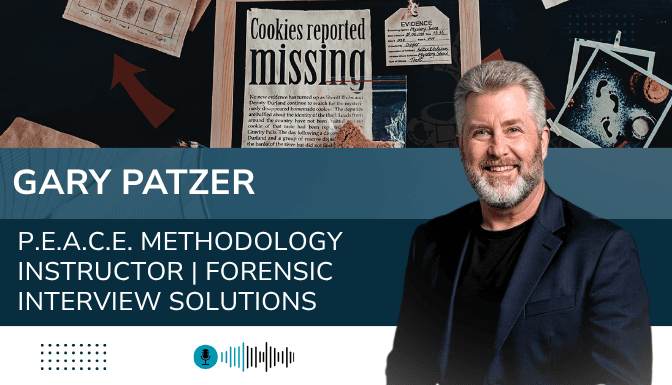
This webinar, presented by Gary Patzer, US Operations Manager at Forensic Interview Solutions, introduces the PEACE framework — a globally recognized, non-confrontational approach to investigative interviewing developed in the United Kingdom in the 1980s and now used as the national standard for investigative interviewing in the UK, Australia, and New Zealand. Built on decades of research and aligned with the United Nations Mendez Principles, PEACE prioritizes information gathering over confession-seeking, and has been shown to yield 30 to 50 percent more reliable information than traditional accusatorial methods.
Drawing on his background as a detective and his experience training organizations including the FBI, FAA, Amazon, and Microsoft, Gary walks through the structure, science, and practical application of PEACE across fraud, financial, HR, audit, and threat-related investigations. The session covers both of the methodology's core frameworks — the Cognitive Interview for cooperative interviewees and Conversation Management for reluctant or untruthful ones — and explains how each phase of the PEACE process contributes to interviews that are accurate, complete, and defensible under scrutiny.

US Operations Manager | Forensic Interview Solutions FIS®
As a trainer with Forensic Interview Solutions, I specialize in the P.E.A.C.E. methodology for investigative interviewing. This framework empowers you to conduct thorough and effective interviews with witnesses, victims, and persons of interest by prioritizing information gathering and focusing on relevant evidence. The P.E.A.C.E. approach emphasizes a non-confrontational and non-suggestive style, enabling you to obtain more comprehensive and reliable information than traditional interview techniques. Drawing on my experience as a detective with a mid-sized Colorado law enforcement agency, I have facilitated P.E.A.C.E. training for a wide range of organizations, including the FBI, FAA, Seattle PD, Albuquerque PD, Amazon, and Microsoft. Importantly, the P.E.A.C.E. framework has been the established national standard for investigative interviewing in the United Kingdom, Australia, and New Zealand for nearly three decades. Its effectiveness has been thoroughly tested and validated in both legal and investigative contexts.
This portal is provided as a training and development resource for City of Markham employees. Every course is delivered by a qualified subject matter expert or learning organization, is quantifiable in hours, and is verifiable — you receive a documented certificate of completion for every course you finish, stored on LearnFormula indefinitely.
If you hold a professional designation (for example in engineering, accounting, human resources, or law), courses may be counted as professionally relevant, verifiable learning activities toward your continuing professional development. Individual practitioners are responsible for confirming that an activity meets the requirements of their professional body. For questions about the City of Markham's training and development policies, please speak with your people leader or Human Resources.
