The purpose of this course is to provide technical information about the potential civil engineering applications of foundry sand.
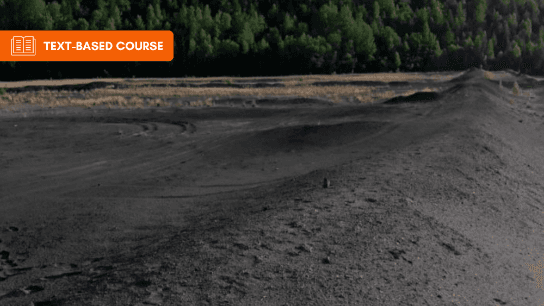
Metal foundries use large amounts of sand as part of the metal casting process. Foundries successfully recycle and reuse the sand many times in a foundry. When the sand can no longer be reused in the foundry, it is removed from the foundry and is termed “foundry sand.” Foundry sand production is nearly 6 to 10 million tons annually. Like many waste products, foundry sand has beneficial applications to other industries. The purpose of this course is to provide technical information about the potential civil engineering applications of foundry sand. This will provide a means of advancing the uses of foundry sand that are technically sound, commercially competitive and environmentally safe.
Topics: • Foundry sand availability • Types of foundry sand • Physical, engineering, and environmental characteristics • Economics and quality • Uses in structural fills and embankments • Uses in road bases, and hot mix asphalt • Uses in flowable fills • Uses in grouts and mortars • Uses in agricultural/soil amendments • Uses in vitrification of hazardous materials • Uses in rock wool, Portland cement and fiberglass manufacturing • Uses in smelting • Uses in landfill cover or hydraulic barriers.
Intended Audience: for Civil, Geotechnical, Environmental, Transportation, Roadway, Construction and other engineers whose job description may require an intermediate knowledge of the beneficial uses of recycled waste byproducts.
Publication Source: USDOT (Federal Highway Administration)
Civil Engneering faculty member for 27 years
Dr. Rossow is a graduate of the University of Michigan with B.S., M.S., and Ph.D. degrees. He is a licensed Professional Engineer in the State of Illinois. He taught civil engineering for over 35 years, including six years at Washington University in St. Louis and 29 years at Southern Illinois University Edwardsville, where he was the Chair of the Civil Engineering Department for ten years. His areas of expertise are in civil engineering and mechanics. He has consulted for various organizations, including government agencies and an international offshore drilling company. He has published numerous technical journal articles and technical reports for a variety of governmental agencies and private sector organizations. Mark P. Rossow, PE, PhD Licensed Professional Engineer in State of Illinois License No. 062.040560 Dr. Rossow is a graduate of the University of Michigan with B.S., M.S., and Ph.D. degrees. He taught civil engineering for over 35 years, including six years at Washington University in St. Louis and 29 years at Southern Illinois University Edwardsville, where he was the Chair of the Civil Engineering Department for ten years. His areas of expertise are in civil engineering and mechanics. He has consulted for various organizations, including government agencies and an international offshore drilling company. He has published many journal articles and technical reports.
This portal is provided as a training and development resource for City of Markham employees. Every course is delivered by a qualified subject matter expert or learning organization, is quantifiable in hours, and is verifiable — you receive a documented certificate of completion for every course you finish, stored on LearnFormula indefinitely.
If you hold a professional designation (for example in engineering, accounting, human resources, or law), courses may be counted as professionally relevant, verifiable learning activities toward your continuing professional development. Individual practitioners are responsible for confirming that an activity meets the requirements of their professional body. For questions about the City of Markham's training and development policies, please speak with your people leader or Human Resources.
