Safeguard modern electrical grids by mastering the essential techniques to detect faults, coordinate protective relays, and prevent catastrophic equipment failure.
Power system protection is one of the most critical functions in electrical engineering. When faults are not detected and isolated correctly, the consequences can include equipment destruction, prolonged outages, cascading failures, and major safety risks across substations and distribution networks. Yet effective protection requires more than understanding relay theory — it requires knowing how protection systems behave in real operating environments.
This practical session examines protection engineering from a real-world substation and distribution network perspective. It covers fault analysis fundamentals, relay operating principles, relay coordination strategies, protection schemes for transformers and feeders, CT and VT applications, and the commissioning and testing practices used to ensure protection systems operate reliably under fault conditions.
Key Topics Discussed:

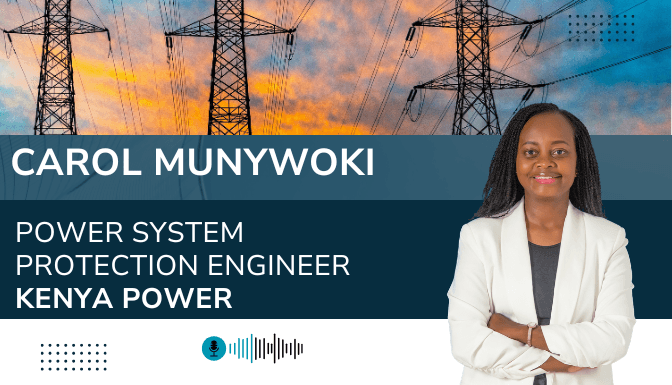
Power System Protection Engineer | Kenya Power
Carol Munywoki is a protection engineer at Kenya Power, dedicated to advancing the global energy transition and expanding access to reliable power in underserved communities. A recipient of the prestigious Manaaki New Zealand Scholarship, Carol earned her Master of Engineering with First Class Honours from the Auckland University of Technology (AUT) in 2025. Her academic tenure in New Zealand focused on sustainable energy engineering and electrical power systems, culminating in a high-impact dissertation that sharpened her technical research and analytical capabilities. Combined with a solid foundational degree in Electrical Engineering from Kenya, Carol possesses a unique blend of international academic excellence and hands-on industrial expertise in grid operations and power systems protection. Driven by a commitment to resilience and social impact, Carol’s professional journey is rooted in her experience growing up in a marginalized community, which ignited her passion for equitable energy solutions. She is a strategic leader and a vocal advocate for women’s representation in STEM, viewing technical education as a vital tool for national development and societal change. Having navigated a highly competitive scholarship process through years of persistence She is focused on applying this expertise to improve protection reliability and network performance across Kenya Power's network, while contributing to Kenya's broader energy transition and the goal of reliable, sustainable power for all communities.
This portal is provided as a training and development resource for City of Markham employees. Every course is delivered by a qualified subject matter expert or learning organization, is quantifiable in hours, and is verifiable — you receive a documented certificate of completion for every course you finish, stored on LearnFormula indefinitely.
If you hold a professional designation (for example in engineering, accounting, human resources, or law), courses may be counted as professionally relevant, verifiable learning activities toward your continuing professional development. Individual practitioners are responsible for confirming that an activity meets the requirements of their professional body. For questions about the City of Markham's training and development policies, please speak with your people leader or Human Resources.
