Master passive fire protection: design and inspect fire-rated assemblies, joints, and penetrations to ensure life safety and property protection.
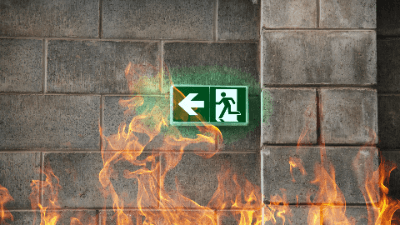
The "Passive Fire Protection Techniques" course offers a comprehensive exploration of critical fire safety strategies and their practical application in construction. This program delves into the vital role of passive fire protection in safeguarding occupants, structures, and business continuity, highlighting its indispensable contribution alongside active fire systems.
You will gain in-depth knowledge of:
This course goes beyond theoretical knowledge, providing real-world case studies and actionable insights to enhance your understanding and application of passive fire protection in both new and existing construction projects. You will learn to navigate the complexities of fire safety design and inspection, ensuring the highest standards of protection for any structure.

Online Courses for Engineers
HalfMoon Education is a nonprofit continuing education provider offering live webinars and on-demand courses for engineers, architects, landscape architects, land surveyors, attorneys, paralegals, accountants and others. Since 1996, we’ve helped thousands of professionals nationwide stay current with industry standards and codes, earn CE hours, and advance their expertise through practical, expert-led learning experiences. Learn more about us at: www.halfmoonseminars.org

Emerson Graham + Associates, Roanoke, VA | PE, FSFPE, CFPS, MCP, CBO
Mr. Biller is owner and principal fire protection engineer of Emerson Graham + Associates – a fire protection engineering and code consultancy firm, as well as principal and code consultant for CODEcheck Consulting, a third‐party review agency serving multiple local jurisdictions with third‐party plan review and inspection services. He also serves as a fire protection engineer for George Mason University’s (GMU) Office of the University Building Official (OUBO), wherein he reviews fire protection and fire/life safety compliance. He holds registration as a professional engineer in multiple states including Virginia. Justin is a member of the International Code Council (ICC), a fellow of the Society of Fire Protection Engineers (SFPE), a member of the Automatic Fire Alarm Association (AFAA) and the National Fire Sprinkler Association (NFSA), and a member of the National Fire Protection Association (NFPA), currently serving on four technical committees of which the Building Construction and Life Safety Code chapters are included. He is an NFPA certified fire protection specialist (CFPS), and he holds the master code professional (MCP), certified building official (CBO), and certified fire official (CFO) certifications, in addition to multiple other code compliance certifications from the ICC. He is a 2014 graduate of the MSc. Fire Protection Engineering program at California Polytechnic State University, and he is a 2007 undergraduate of the BSc., Engineering Technology program at Old Dominion University. Mr. Biller is an adjunct lecturer at Eastern Kentucky University and University of North Carolina at Charlotte in each of the respective undergraduate programs in Fire and Safety Engineering Technology. In his educational background, he has taught on an array of courses including fire and building codes, fire behavior and fire dynamics, human behavior in fire, fire protection systems and hydraulics, fire modeling and performance based aspects of fire protection engineering design, fire prevention and fire protection public policy.
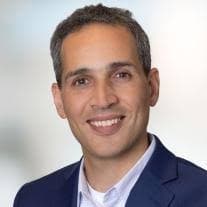
P.E., LEED AP
Dr. Ashrafi is a member of Thornton Tomasetti’s Forensics practice and its Advanced Analytics group. He has a depth of experience in structural design and modifications, seismic and wind performance‐based design, advanced analytics, nonlinear and dynamic analysis, deconstruction engineering, emergency response and forensic investigation. He specializes in performance‐based fire engineering and uses a range of advanced analysis tools to predict how structures will behave during a fire. Dr. Ashrafi has been an adjunct professor at Columbia University, teaching the course Earthquake and Wind Engineering since 2011, and where he also introduced a short course on Structural Fire Engineering in 2020. He is the author of numerous technical papers and articles and is a frequent 5 presenter at academic and industry conferences and events. Dr. Ashrafi also serves as a reviewer for several technical journals, is vice‐chair of ASCE’s Fire Protection Committee and a member of its Dynamics Committee.
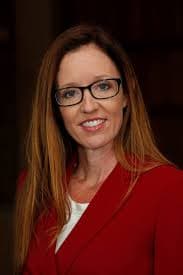
Halpert Life Safety Consulting
Ms. Halpert has been responsible for quality control on projects valued over $18 billion, which means she has covered roughly 25 million square feet of project space in the last 12 years alone. The last 20 years has had her trouble shooting firestop issues on everything from a nuclear power plant to sports stadiums, hospitals, telecommunications, mega‐resorts and more. Ms. Halpert is also a voting member of ASTM and a member of the International Firestop Council. She was selected by Rutgers to teach NJ building inspectors and sub code officials. She has presented at ICC, AIA and SFPE conferences and events across the US and as far away as Saudi Arabia.
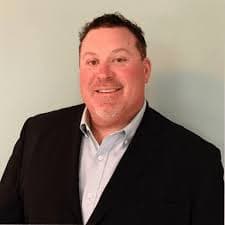
Mr. Tesche is responsible for overall strategic management and direction for Global FPG. With more than 30 years of experience in the industry, he is a well‐recognized code and standards expert in the fields of passive fire protection and lean construction methodology. He has created and successfully managed several businesses, and is a respected manager of engineering, consulting, and design‐based teams. Serving on several industry committees, Mr. Tesche has been instrumental in shaping the content and the inspection process for the passive fire protection industry. His portfolio includes work for several of the largest buildings and healthcare facilities in North America and numerous projects in the Middle East and Canada. Mr. Tesche continues to bring value to customers through engineered services, training, and project management. His passion includes presenting and training on behalf of Global FPG and the International Firestop Council across the world. He is an integral member of the International Firestop Council, chairing the Firestop Inspector Committee, and serves as the Task Group Chair for the ASTM 3038: Qualifications Firestop Inspector, as well as an active voting member on the ASTM E05 & E06 and sits on the UL Standard Technical Panel 1479 and 2079. He is the first Intertek IQP Firestop Inspector. Mr. Tesche is also a member of ICC Liberty Chapter, American Society of Healthcare Engineers, ASTM, ASSE, and IFC. He attended Drexel University receiving a degree in Construction Management, attended Wharton Entrepreneur Program with a Certificate in Strategic Management, Managing the Global Firm, and Leadership 21st Century.

President, FireWise Consultants LLC
Mr. Johnson has over 16 years of experience in the firestopping and passive fire protection industry. He has focused most of his career helping design as well as problem solve on some of the largest and most complex construction projects in the US. Mr. Johnson is an active member at numerous industry association as well as a leader in the education to the inspection community.
This portal is provided as a training and development resource for City of Markham employees. Every course is delivered by a qualified subject matter expert or learning organization, is quantifiable in hours, and is verifiable — you receive a documented certificate of completion for every course you finish, stored on LearnFormula indefinitely.
If you hold a professional designation (for example in engineering, accounting, human resources, or law), courses may be counted as professionally relevant, verifiable learning activities toward your continuing professional development. Individual practitioners are responsible for confirming that an activity meets the requirements of their professional body. For questions about the City of Markham's training and development policies, please speak with your people leader or Human Resources.
