Master advanced investigative interviewing techniques to expose deception and uncover how perpetrators exploit systemic vulnerabilities.
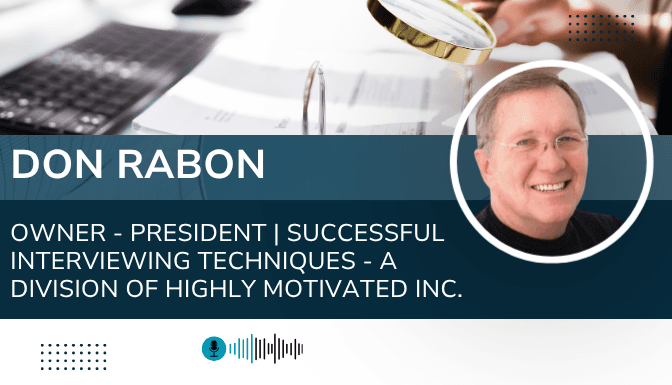
In this session, presenter Don Rabon explores the opportunity element of Cressey's fraud triangle and shows how it can serve not only as a lens on how fraud is committed but also as a foundation for conducting more effective fraud-related interviews. Reframing the triangle so that pressure/motive becomes heat, opportunity becomes fuel, and rationalization becomes oxygen, Don walks through the case of the missing platinum — a North Carolina manufacturing company that discovered a $100,000 shortfall in its annual scrap-platinum sale-back — to illustrate how pre-interview preparation can shape interview outcomes.
He shares the preparatory steps he uses before any fraud interview: convening informed stakeholders around a flip chart to surface every possible "way" the fraud could occur, applying the Delphi method to rank those options without one voice dominating the room, and mapping the operation through four elements of inquiry — who, where, what, and temporal occurrences. He then introduces his "question generating machine," a hands-on technique that pairs the four elements of inquiry with "if, then, therefore" conditional logic to produce an endless stream of questions before walking into the room.
The session also addresses attentive listening to verbal, vocal, and non-verbal behavior, the timing of open and amplifying questions, the shifting social mores reshaping the modern fraud interview, and the particular challenges of remote and virtual interviews.

Owner - President | Successful Interviewing Techniques - a Division of Highly Motivated Inc.
Don retired as Deputy Director Western Campus, North Carolina Justice Academy, and was formerly manager of the Investigations Center of the North Carolina Justice Academy. Don has law enforcement experience in rural and municipal law enforcement agencies and instructional areas including Interviewing, Detecting Deception, Rapport Building, Interrogation, Persuasion, Audit-Related Interviewing, Investigations, and Investigative Discourse Analysis. For over a period of 35 years, his interviewing instruction and investigative assistance has been provided to related professionals in 46 U.S States as well as Puerto Rico, The Virgin Islands, Belgium, France, Germany, Australia, New Zealand, Canada, Trinidad, Barbados, Singapore, Ireland, and England. In addition, he has provided training to Federal, State, and Local Criminal Justice Personnel, NATO Counterintelligence Personnel as well as private sector investigative and corporate security personnel. Don has his A.A.S. in Criminal Justice, from Davidson County Community College and a B.S. in Criminal Justice Administration, from East Tennessee State University. He has performed advanced studies at Eastern Kentucky University and has military experience with the US Army. He is a published author of 4 texts: Interviewing and Interrogation 2nd edition; Investigative Discourse Analysis 2nd Edition; Persuasive Interviewing; Fraud Related Interviewing and is editor of the interviewing focused newsletter, Hamlet’s Mind.
This portal is provided as a training and development resource for City of Markham employees. Every course is delivered by a qualified subject matter expert or learning organization, is quantifiable in hours, and is verifiable — you receive a documented certificate of completion for every course you finish, stored on LearnFormula indefinitely.
If you hold a professional designation (for example in engineering, accounting, human resources, or law), courses may be counted as professionally relevant, verifiable learning activities toward your continuing professional development. Individual practitioners are responsible for confirming that an activity meets the requirements of their professional body. For questions about the City of Markham's training and development policies, please speak with your people leader or Human Resources.
