Master the fundamentals of open channel flow, from theory to practical design. Learn to analyze complex systems, predict behavior, and engineer stable, efficient channels.
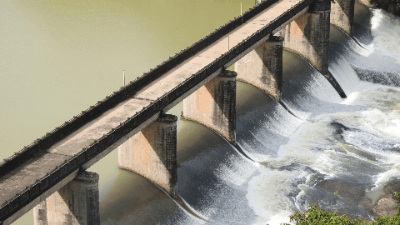
Explore the intricate world of "Open Channel Hydraulics and Design," a comprehensive course delving into the fundamental principles and practical applications of open channel flow. This program is essential for professionals seeking to master the complexities of water conveyance, stability, and design in natural and constructed channels.
You will gain a deep understanding of:
Through detailed discussions, practical examples, and explorations of industry-standard tools like HEC-RAS and Hydraulic Toolbox, this course equips you with the knowledge to tackle real-world open channel design challenges effectively and ensure structurally sound and environmentally responsible hydraulic solutions.

Online Courses for Engineers
HalfMoon Education is a nonprofit continuing education provider offering live webinars and on-demand courses for engineers, architects, landscape architects, land surveyors, attorneys, paralegals, accountants and others. Since 1996, we’ve helped thousands of professionals nationwide stay current with industry standards and codes, earn CE hours, and advance their expertise through practical, expert-led learning experiences. Learn more about us at: www.halfmoonseminars.org

Emeritus Professor of Civil and Environmental Engineering at Utah State University (USU)
Professor Rahmeyer is an emeritus professor of Civil and Environmental Engineering at Utah State University (USU); for 31 years he was on the faculty at USU, and for 10 years as research faculty at Colorado State University. Professor Rahmeyer is the past department head of Civil and Environmental Engineering at USU as well as the senior professor of the Hydraulics and Fluid Mechanics program of the Utah Water Research Laboratory. He also served at USU as the director of the Hydro Composite Modeling Program, the Division Head of Water Engineering, the interim division head of both the Structures Division and the Transportation Division, and as the undergraduate curriculum division head. Professor Rahmeyer is currently part-time as a senior associate for Ayres and Associates in Fort Collins, Colorado, where his primary role is to conduct national workshops in hydraulics, culvert flow, and urban drainage for the National Hydraulic Institute of FHWA. He is a fellow and lifetime member of the American Society of Civil Engineers. Professor Rahmeyer has been a member of several professional societies, and has served on committees for the American Society of Engineering Educators (ASEE), the American Society of Civil Engineers (ASCE), the International Association of Hydraulic Research (IAHR), the Association of State Dam Safety Officers (ASDSO), the Instrument Society of America (ISA), the American Water Works Association (AWWA), the International Erosion Control Association (IECA), and the American Society of Heating and Refrigerating Association (ASHRAE). He has regularly attended and presented at the annual conferences of ASDSO, ASEE, ASCE, IAHR, ASCE National Department Heads, and the Transportation Research Board (TRB). In the past, he has been a member of the United States Committee on Large Dams (USCOLD) and the International Committee on Large Dams (ICOLD). Over the last several years, Professor Rahmeyer has created and presented a workshop on open channel flow for Half Moon Education and finished serving on the Bluestone Dam UASCE IEPA and on several 100% DDR review panels for the USACE. He has been on the board of directors for the Utah Floodplain and Storm Water Management Association since 1986. Professor Rahmeyer was a member of the 2008 Battelle “Final Independent Peer Review Report for U.S. Army Corps of Engineers on the Vegetation Policy for Local Flood Damage Reduction Systems” which reviewed many of the guidelines and policies for management of levees, floodwalls, embankment dams, and appurtenant structures. Some of his recent awards include the ASHRAE Technical/Symposium Paper Award, the ASHRAE Crosby Field Award for Research, and the South Pacific Division Regional Project Delivery Team Award from the U.S. Army Corps of Engineers. He has received the Idaho Transportation Department 2012 Excellence in Transportation Award and the 2011 ACEC of Idaho Engineering Excellence Grand Award for the I-84 New York Canal Modeling and Modification. Professor Rahmeyer further received an honorable mention at the 2012 National ACEC award ceremonies for his work with the I-84 New York Canal.
This portal is provided as a training and development resource for City of Markham employees. Every course is delivered by a qualified subject matter expert or learning organization, is quantifiable in hours, and is verifiable — you receive a documented certificate of completion for every course you finish, stored on LearnFormula indefinitely.
If you hold a professional designation (for example in engineering, accounting, human resources, or law), courses may be counted as professionally relevant, verifiable learning activities toward your continuing professional development. Individual practitioners are responsible for confirming that an activity meets the requirements of their professional body. For questions about the City of Markham's training and development policies, please speak with your people leader or Human Resources.
