A diversion is a channel with a supporting ridge on the lower side constructed across the slope.
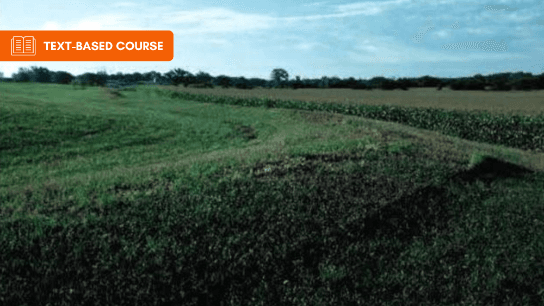
A diversion is a channel with a supporting ridge on the lower side constructed across the slope. Diversions are used to divert water away from active gullies or critically eroding areas, supplement water management on conservation cropping or strip cropping systems, break up concentrations of water on long, gentle slopes and on undulating or warped land surfaces that are generally considered too flat or irregular for terracing. Other uses include diverting water away from farmsteads, agricultural waste systems, and other improvements, collecting or directing water for water-spreading or water-harvesting systems, to increase or decrease the drainage area above ponds, to protect terrace systems by diverting water from the top terrace where topography, land use, or landownership prevents terracing the land above, to intercept surface and shallow subsurface flow, protect flat lands from upland runoff and overland flow from adjacent areas, control runoff and erosion on urban or developing areas, construction sites, and surface mine sites, and to act as a grass filter for reducing sediment in runoff waters when vegetated.
Topics: Assessment of Suitability Planning and Preliminary Design Considerations Diversion Types Slope, Velocity, Cross-Sectional Shape Vegetative Considerations Sedimentation Control Outlet Design Data Collection Procedures Capacity and Stability Measures Alternate Channel Linings Layout and Construction of Diversions.
Intended Audience: water resources, civil, geotechnical, land development, construction, and hydraulics engineers. However, this course could appeal to engineers of other disciplines as well.
Publication Source: USDA - Natural Resource Conservation Service
Civil Engneering faculty member for 27 years
Dr. Rossow is a graduate of the University of Michigan with B.S., M.S., and Ph.D. degrees. He is a licensed Professional Engineer in the State of Illinois. He taught civil engineering for over 35 years, including six years at Washington University in St. Louis and 29 years at Southern Illinois University Edwardsville, where he was the Chair of the Civil Engineering Department for ten years. His areas of expertise are in civil engineering and mechanics. He has consulted for various organizations, including government agencies and an international offshore drilling company. He has published numerous technical journal articles and technical reports for a variety of governmental agencies and private sector organizations. Mark P. Rossow, PE, PhD Licensed Professional Engineer in State of Illinois License No. 062.040560 Dr. Rossow is a graduate of the University of Michigan with B.S., M.S., and Ph.D. degrees. He taught civil engineering for over 35 years, including six years at Washington University in St. Louis and 29 years at Southern Illinois University Edwardsville, where he was the Chair of the Civil Engineering Department for ten years. His areas of expertise are in civil engineering and mechanics. He has consulted for various organizations, including government agencies and an international offshore drilling company. He has published many journal articles and technical reports.
This portal is provided as a training and development resource for City of Markham employees. Every course is delivered by a qualified subject matter expert or learning organization, is quantifiable in hours, and is verifiable — you receive a documented certificate of completion for every course you finish, stored on LearnFormula indefinitely.
If you hold a professional designation (for example in engineering, accounting, human resources, or law), courses may be counted as professionally relevant, verifiable learning activities toward your continuing professional development. Individual practitioners are responsible for confirming that an activity meets the requirements of their professional body. For questions about the City of Markham's training and development policies, please speak with your people leader or Human Resources.
