Understanding Essential Auxiliary Systems for Safe and Efficient LNG Plant Operations

This course, 'LNG Auxiliary Systems: It's Not All About LNG,' is designed to provide a high-level understanding of the auxiliary systems essential for the operation of LNG plants. Participants will explore the functionality, maintenance, and critical importance of various auxiliary systems such as glycol cooling and heating systems, instrument air, fire protection, and emergency power systems, among others. The course emphasizes the significance of reliable auxiliary systems in ensuring safe and efficient LNG plant operations.
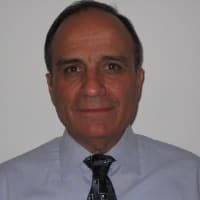
** Mechanical Engineering and Process Engineering ** Dr. Vitale is a graduate of NYU Tandon School of Engineering (formerly NY Polytechnic University) with a B.S., M.S., and Ph.D. in Mechanical Engineering and an M.S. in Civil Engineering. He has been licensed as a P.E. in 6 states and keeps his P.E. licenses active in New York, Pennsylvania, and New Mexico. Dr. Vitale has worked in the natural gas and LNG industry for over 50 years. In 2004 he retired as Vice President and Chief Engineer over Gas Engineering and 28 Production facilities for KeySpan Energy across New York City, Long Island, Rhode Island, Massachusetts, and New Hampshire. During his employment with KeySpan, he often taught Thermodynamics, Heat Transfer, Fluid Dynamics, and other energy courses at NY Polytechnic University. From 2004 to the present, Dr. Vitale has focused on consulting for the Gas Industry with a specialty in training the industry’s human resources on how to make safety and reliability their major focus through understanding the technologies. More than half of Dr. Vitale’s consulting has been focused on training Liquefied Natural Gas (LNG) Operating personnel on generic and site-specific operations of their plants. Dr. Vitale has generated and delivered training materials for import terminals, export terminals, peak shavers, and portable LNG facilities. His courses have been both open-enrollment and plant-specific. He has trained clients in the U.S., Canada, Mexico, South America, Europe, Mid-East, and China. Dr. Vitale has also provided expert testimony for justifying asset (pipeline and service) replacement programs and new facilities (LNG or pipeline or compressors) for system reinforcements to meet the peak-day demands of the industry’s customers. Dr. Vitale’s passion is to train Gas Operators on their gas systems' safe, reliable, and efficient operation and develop a continuous learning culture.
This portal is provided as a training and development resource for City of Markham employees. Every course is delivered by a qualified subject matter expert or learning organization, is quantifiable in hours, and is verifiable — you receive a documented certificate of completion for every course you finish, stored on LearnFormula indefinitely.
If you hold a professional designation (for example in engineering, accounting, human resources, or law), courses may be counted as professionally relevant, verifiable learning activities toward your continuing professional development. Individual practitioners are responsible for confirming that an activity meets the requirements of their professional body. For questions about the City of Markham's training and development policies, please speak with your people leader or Human Resources.
