Demystifying the common language, communication methods, and engineering logic of modern power utility automation.
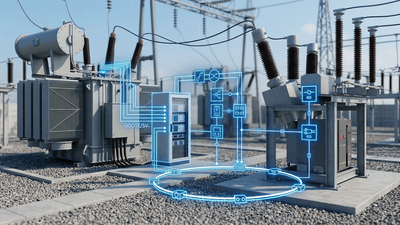
Why I think there is a need for this course:
Modern substations increasingly rely on IEC 61850 for protection, control, and automation, yet many practising electricians, technologists, and junior engineers have only been exposed to legacy hard‑wired schemes and proprietary protocols. Utilities and OEMs are deploying IEC 61850‑based systems faster than entry‑level staff can be trained, creating a skills gap at the interface between traditional power‑system knowledge and digital communications. This course is intended to bridge that gap by giving new practitioners a clear, structured introduction to the concepts, terminology, and practical implications of IEC 61850 before they are asked to interpret SCL files, commission IEDs, or troubleshoot GOOSE‑based schemes.
Description:
This course introduces IEC 61850 in simple terms for entry-level students who are new to digital substations, protection and control systems, and utility communication networks. IEC stands for International Electrotechnical Commission, and IEC 61850 is a standard series called “Communication networks and systems for power utility automation”; IEC describes Part 1 as an introduction and overview for power utility automation systems, including communication between intelligent electronic devices in those systems. In plain language, IEC 61850 helps devices in an electrical power system describe information in a common way and exchange that information over a communication network instead of depending only on point-to-point hardwired signals.
The course uses one guiding idea: IEC 61850 is not just “a protocol.” It is a shared language for power-system devices, a way to name data, a way to exchange messages, and a way to describe the system configuration. This course describes IEC 61850 as a standard series that includes specifications and technical reports for power utility automation, including protocols, data models, and configuration aspects for substation automation and related utility applications. It explains that IEC 61850 uses a virtualized model with logical devices, logical nodes, common data classes, and communication services, allowing device behavior and data to be defined separately from the specific communication method.
Learning Outcomes:
After completing this course, learners will be able to:

An entire career in the power sector of engineering, Graham graduated from Queen's university coupled with subsequent studies with Wilfrid Laurier University to travel the globe and apply his skills and garner his protection and control experience internationally. His passion for staying in touch with his profession and his kinship for mentoring has kept him in front of an audience of learners.
This portal is provided as a training and development resource for City of Markham employees. Every course is delivered by a qualified subject matter expert or learning organization, is quantifiable in hours, and is verifiable — you receive a documented certificate of completion for every course you finish, stored on LearnFormula indefinitely.
If you hold a professional designation (for example in engineering, accounting, human resources, or law), courses may be counted as professionally relevant, verifiable learning activities toward your continuing professional development. Individual practitioners are responsible for confirming that an activity meets the requirements of their professional body. For questions about the City of Markham's training and development policies, please speak with your people leader or Human Resources.
