This course discusses legal and political principles that should be taken into consideration in ITS design, from initial concept through implementation.
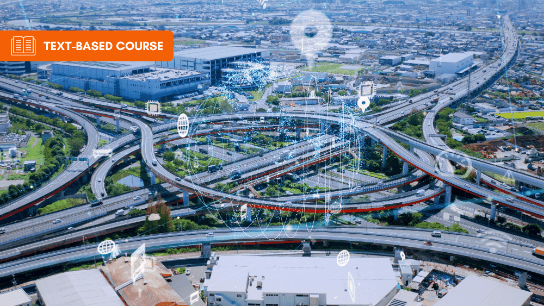
Intelligent Transportation System (ITS) project developers must understand the implications of collecting personally identifiable information (PII), such as vehicle location, movement, and occupant identity, as these data can attract interest from law enforcement or civil litigation parties. The course explores the legal and political principles essential to ITS design, emphasizing the risks associated with external use of collected data. Public backlash or civil-liberties litigation could threaten project viability if these issues are not addressed. Real-world examples include automated traffic law enforcement (e.g., red-light cameras), vehicle miles traveled taxes, electronic tolling systems, and electronic enforcement of graduated driver’s licenses. The historical perspective of seat-belt ignition interlocks highlights civil-liberties concerns predating ITS.
The course underscores the importance of understanding privacy as both a political concept and a legal protection, which enables ITS developers to design systems that gain public acceptance and avoid privacy-related controversies.
Topics:This course teaches the following specific knowledge and skills:
Intended Audience:Transportation, civil, construction, and ITS developers and engineers.
Publication Source:This course is based on Report No. CTS 11-21, “ITS and Locational Privacy: Suggestions for Peaceful Coexistence,” written by Frank Douma and Sarah Aue, sponsored by the Intelligent Transportation Systems Institute, Center for Transportation Studies, University of Minnesota, October 2011.
Civil Engneering faculty member for 27 years
Dr. Rossow is a graduate of the University of Michigan with B.S., M.S., and Ph.D. degrees. He is a licensed Professional Engineer in the State of Illinois. He taught civil engineering for over 35 years, including six years at Washington University in St. Louis and 29 years at Southern Illinois University Edwardsville, where he was the Chair of the Civil Engineering Department for ten years. His areas of expertise are in civil engineering and mechanics. He has consulted for various organizations, including government agencies and an international offshore drilling company. He has published numerous technical journal articles and technical reports for a variety of governmental agencies and private sector organizations. Mark P. Rossow, PE, PhD Licensed Professional Engineer in State of Illinois License No. 062.040560 Dr. Rossow is a graduate of the University of Michigan with B.S., M.S., and Ph.D. degrees. He taught civil engineering for over 35 years, including six years at Washington University in St. Louis and 29 years at Southern Illinois University Edwardsville, where he was the Chair of the Civil Engineering Department for ten years. His areas of expertise are in civil engineering and mechanics. He has consulted for various organizations, including government agencies and an international offshore drilling company. He has published many journal articles and technical reports.
This portal is provided as a training and development resource for City of Markham employees. Every course is delivered by a qualified subject matter expert or learning organization, is quantifiable in hours, and is verifiable — you receive a documented certificate of completion for every course you finish, stored on LearnFormula indefinitely.
If you hold a professional designation (for example in engineering, accounting, human resources, or law), courses may be counted as professionally relevant, verifiable learning activities toward your continuing professional development. Individual practitioners are responsible for confirming that an activity meets the requirements of their professional body. For questions about the City of Markham's training and development policies, please speak with your people leader or Human Resources.
