This course is based on Chapters 11-14 of the manual, which focusses on technical information about methods to screen, characterize and remove illicit discharges in MS4 communities.
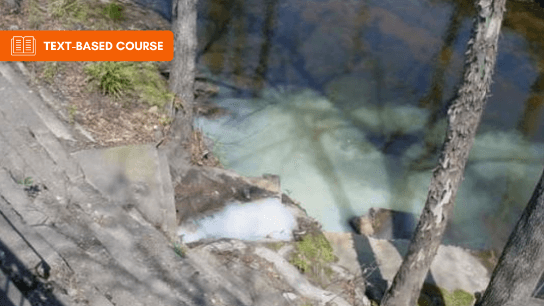
Provisions of the 1987 Clean Water Act require National Pollutant Discharge Elimination System (NPDES) permits for storm water discharges. Section 402 (p)(3)(B)(ii) of the law requires that permits for municipal separate storm sewers (MS4s) shall include a requirement to prohibit problematic non-storm water discharges into storm sewers. Thus affected agencies must identify and locate sources of non-storm water discharges into storm drains so that appropriate actions for their elimination may be instituted. To provide support and guidance, primarily to Phase II NPDES MS4 communities, for the establishment of Illicit Discharge Detection and Elimination (IDDE) programs, the Environmental Protection Agency funded the development of a manual, “Illicit Discharge Detection and Elimination, A Guidance Manual for Program Development and Technical Assessments.”
The manual also has application for Phase I communities looking to modify existing programs and for groups such as watershed organizations that are interested in watershed restoration activities. This course is based on Chapters 11-14 of the manual, which focusses on technical information about methods to screen, characterize and remove illicit discharges in MS4 communities. Detailed information is presented on specific monitoring techniques and protocols.
Topics: Components of an outfall reconnaissance inventory (ORI) Desktop analysis to support the ORI Customizing the ORI for a particular community Interpreting ORI data Sample collection considerations Methods to analyze indicator samples Techniques to interpret sample data Tracking discharges to a source: investigations of storm drain networks, drainage areas, septic systems, and on-site facilities Techniques to fix discharges
Intended Audience: civil, environmental, and hydraulic engineers concerned with stormwater management.
Publication Source: US Environmental Protection Agency
Civil Engneering faculty member for 27 years
Dr. Rossow is a graduate of the University of Michigan with B.S., M.S., and Ph.D. degrees. He is a licensed Professional Engineer in the State of Illinois. He taught civil engineering for over 35 years, including six years at Washington University in St. Louis and 29 years at Southern Illinois University Edwardsville, where he was the Chair of the Civil Engineering Department for ten years. His areas of expertise are in civil engineering and mechanics. He has consulted for various organizations, including government agencies and an international offshore drilling company. He has published numerous technical journal articles and technical reports for a variety of governmental agencies and private sector organizations. Mark P. Rossow, PE, PhD Licensed Professional Engineer in State of Illinois License No. 062.040560 Dr. Rossow is a graduate of the University of Michigan with B.S., M.S., and Ph.D. degrees. He taught civil engineering for over 35 years, including six years at Washington University in St. Louis and 29 years at Southern Illinois University Edwardsville, where he was the Chair of the Civil Engineering Department for ten years. His areas of expertise are in civil engineering and mechanics. He has consulted for various organizations, including government agencies and an international offshore drilling company. He has published many journal articles and technical reports.
This portal is provided as a training and development resource for City of Markham employees. Every course is delivered by a qualified subject matter expert or learning organization, is quantifiable in hours, and is verifiable — you receive a documented certificate of completion for every course you finish, stored on LearnFormula indefinitely.
If you hold a professional designation (for example in engineering, accounting, human resources, or law), courses may be counted as professionally relevant, verifiable learning activities toward your continuing professional development. Individual practitioners are responsible for confirming that an activity meets the requirements of their professional body. For questions about the City of Markham's training and development policies, please speak with your people leader or Human Resources.
