Master the principles of ground source heat pumps to design, size, and install high-efficiency geothermal systems for residential and commercial projects.
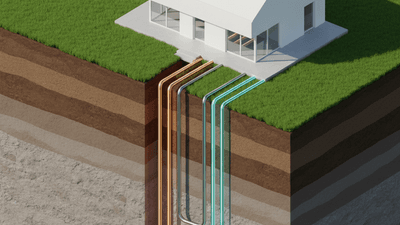
This 7-hour course explores the science, operation, architecture, benefits, and efficiency of geothermal heating and cooling systems. The course analyzes the design of both closed and open loop systems, demonstrates how to measure efficiency and soil conductivity, and explains how to select components, size systems, and install loops. The course concludes with an assessment of geothermal case studies.
The curriculum begins by establishing the case for geothermal energy, contrasting it with conventional fossil fuel systems. You will explore the fundamental refrigeration cycle—the heart of any heat pump—and learn how the compressor, condenser, metering device, and evaporator work in unison to transfer heat rather than generate it. The course demystifies the terminology, moving from basic thermodynamics to the specific mechanics of geo-exchange systems.
A significant portion of the course is dedicated to the "earth loop" itself. You will examine the architecture of various loop configurations, including horizontal trenches, vertical bores, slinky loops, and pond applications. The instructor breaks down the critical differences between closed-loop and open-loop (pump and dump) systems, discussing the impact of local topography, soil thermal conductivity, and hydrology on system design. From drilling and grouting to selecting the right antifreeze, every aspect of the exterior installation is covered.
Moving inside the building, the course details the mechanical room components. You will learn about flow centers, circulating pumps, and the mathematics behind sizing equipment properly. The instructor emphasizes the importance of accurate load calculations—evaluating heat loss and gain through transmission, infiltration, and solar effect—to ensure systems are neither undersized nor wastefully oversized. The discussion extends to economic analysis, teaching you how to calculate Coefficients of Performance (COP) and Energy Efficiency Ratios (EER) to demonstrate return on investment.
Key topics covered in this course include:
By the end of this presentation, you will possess a robust understanding of how to evaluate, design, and justify geothermal systems. Through detailed case studies—ranging from residential net-zero homes to large-scale university retrofits—you will see the tangible benefits of this technology in action. Join us to master the mechanics of the most energy-efficient heating and cooling technology on the market today.

Online Courses for Engineers
HalfMoon Education is a nonprofit continuing education provider offering live webinars and on-demand courses for engineers, architects, landscape architects, land surveyors, attorneys, paralegals, accountants and others. Since 1996, we’ve helped thousands of professionals nationwide stay current with industry standards and codes, earn CE hours, and advance their expertise through practical, expert-led learning experiences. Learn more about us at: www.halfmoonseminars.org

Professor of Heating, Air Conditioning and Refrigeration at Grand Rapids Community College
Mr. Steeby is a professor of Heating, Air Conditioning, and Refrigeration at Grand Rapids Community College. He has taught full-time with GRCC since 2007. Mr. Steeby has also taught as an adjunct professor for Ferris State University in Construction Management. He received his Bachelor of Science degree in HVAC/R Applied Technology from Ferris State University, and his Master’s degree in Career and Technical Education also from Ferris State University. Mr. Steeby has worked in the HVAC field since 1985. He has held positions in many areas of the industry including installation, service, sales, and project management. Mr. Steeby has worked for a local manufacturer of HVAC equipment for over five years, and he was employed by Honeywell for 11 years. He holds a mechanical contractor’s license with the State of Michigan, and he has several nationally-recognized certifications including installation and service of geothermal equipment with North American Technician Excellence (NATE). Mr. Steeby is also a certified trainer and installer of geothermal heat pumps through the International Ground Source Heat Pump Association (IGSHPA). He has been actively involved in the geothermal industry for many years including writing software to size loop links and working on several commercial geothermal installations. In 2011, he published his book Alternative Energy – Sources and Systems through Cengage Learning which includes chapters on geothermal systems.
This portal is provided as a training and development resource for City of Markham employees. Every course is delivered by a qualified subject matter expert or learning organization, is quantifiable in hours, and is verifiable — you receive a documented certificate of completion for every course you finish, stored on LearnFormula indefinitely.
If you hold a professional designation (for example in engineering, accounting, human resources, or law), courses may be counted as professionally relevant, verifiable learning activities toward your continuing professional development. Individual practitioners are responsible for confirming that an activity meets the requirements of their professional body. For questions about the City of Markham's training and development policies, please speak with your people leader or Human Resources.
