Master the principles of geotechnical engineering and retaining wall design for safe and reliable structures.
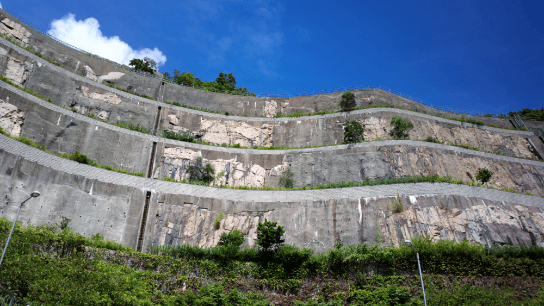
This comprehensive course offers a complete introduction to geotechnical engineering and retaining wall design. Students will learn about the essential properties of soil and rock and how they interact with structures. The course emphasizes the role of geotechnical engineering in ensuring structural safety and sustainability, along with the importance of retaining walls for erosion control, structural stability, and creating level surfaces on sloping terrain.
Key principles and terminology related to retaining walls are introduced, including the forces acting on them and the various types: gravity, semi-gravity, cantilever, counterfort, anchored, and mechanically stabilized earth retaining walls.
Students will explore the categories of lateral earth pressure, including at-rest, active, and passive conditions, as well as the design process involved. The course also addresses construction materials, the need for thorough site investigation to ensure durability and serviceability, and the calculation of lateral earth pressure coefficients using Rankine and Coulomb earth pressure theories.
The curriculum also highlights the need to design structures to withstand natural hazards such as earthquakes and floods. It discusses building codes that specify expected structural lifespans and the importance of designing for long-term performance.
Case studies and examples of retaining wall failures are included to underscore the consequences of poor design and the value of proper investigation. The course also compares strategies for rehabilitation versus full replacement of structures.
Upon completion, students will be equipped with the knowledge and skills to design and analyze safe, durable, and reliable retaining walls. They will also develop a strong foundation in geotechnical engineering concepts, enabling effective collaboration with engineers to deliver stable and resilient structures.

Geotechnical Engineer | Thurber Engineering Ltd.
I am a Consulting Engineer with an interest in Geotechnical Engineering Design and Geotechnical/Structural Seismic Analysis with more than 12 years of consulting and academic experience. I have worked in Canada and United States on various projects, acquiring valuable knowledge and experience in a range of geotechnical fields such as infrastructures, dams, pile analysis and testing, overburden drilling and rock coring supervision, seismic analysis and geotechnical site characterization. I have expertise in the multichannel analysis of surface waves (MASW) method, seismic downhole test and liquefaction analysis and I have completed several projects. I have extensive knowledge of resonant columns, bender element tests, and ultrasonic measurements. I have been actively involved in project coordination and technical analysis, geotechnical field investigations, numerical analysis (slope stability and seepage analysis), pile analysis and design and report preparation. Besides my engineering duties, I volunteer as a Treasurer on the School Council. ACHIEVEMENTS -Teaching Assistantship Award, Sanford Fleming Foundation, University of Waterloo, 2015 -Ranked First, Graduate Student Competition, Canadian Geotechnical Society – Southern Ontario Section, 2013

Podcast Host | LearnFormula
Born in New Zealand, educated in England, and now a Canadian citizen living in Toronto, Steve is truly a ‘global citizen’. After a 38-year career in financial services, covering the wealth management spectrum, Steve draws on his experience in client discovery when interviewing podcast guests to generate a vibrant dialogue that draws on the expertise of his guests. Steve is a graduate of the University of Liverpool, is a member of the Society of Trust and Estate Practitioners, and a trained Family Enterprise Adviser. Steve is married to Tiffany, with a blended family of 6 children. In his spare time, he pursues a variety of adventure-based activities, including cycling, hiking, kayaking as well as winter and summer camping.
This portal is provided as a training and development resource for City of Markham employees. Every course is delivered by a qualified subject matter expert or learning organization, is quantifiable in hours, and is verifiable — you receive a documented certificate of completion for every course you finish, stored on LearnFormula indefinitely.
If you hold a professional designation (for example in engineering, accounting, human resources, or law), courses may be counted as professionally relevant, verifiable learning activities toward your continuing professional development. Individual practitioners are responsible for confirming that an activity meets the requirements of their professional body. For questions about the City of Markham's training and development policies, please speak with your people leader or Human Resources.
