A practical engineering investigation workflow - evidence preservation, fracture features, testing, and defensible conclusions to prevent recurrence and support due diligence in Canada.
Failures are rarely caused by a single defective component. More often, they result from interacting factors such as design assumptions, material variability, fabrication or heat treatment issues, environmental conditions, loading history, maintenance practices, and human factors. Forensic failure analysis converts these events into structured evidence that supports corrective action—and, when necessary, defensible engineering conclusions.
This CPD webinar is designed for professional engineers in Canada who investigate failures in mechanical components, structures, piping, pressure equipment, rotating machinery, and manufactured products. The course follows a repeatable workflow: scene documentation and evidence preservation, hypothesis development, fracture and damage feature recognition, selection of materials testing and non-destructive examination (NDE), and root-cause synthesis using cause-and-effect and barrier analysis methods.
While Canadian codes do not provide a single unified framework for forensic analysis, investigations often intersect with regulated equipment and code-based obligations. Where relevant, the webinar explains how findings align with Canadian standards and practices—such as CSA Z662 for pipeline-related components and facility interfaces, CSA B51 and jurisdictional pressure equipment requirements, and documentation expectations that support professional due diligence.
The structure remains broad enough for the instructor to adapt examples across industries and failure types.

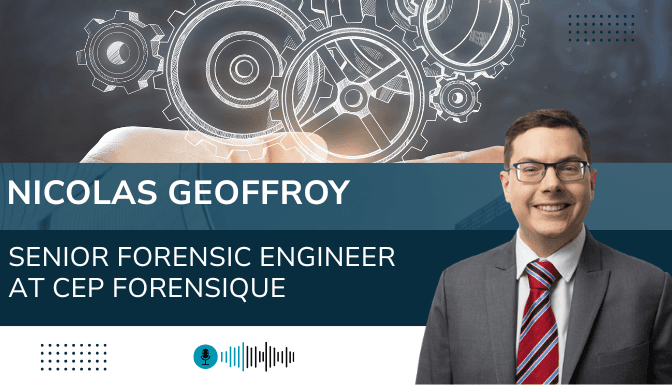
National Practice Lead, Materials & Metallurgy | Senior Forensic Engineer | CEP Forensique
Nicolas Geoffroy, Materials Engineer, holds a bachelor’s degree in Engineering (2007) and a Ph. D. in Metallurgical Engineering (2011) from McGill University. He taught at the undergraduate level and through the years, took part in various metallurgical research projects for different industries. He also worked at the École Polytechnique de Montréal and in a consulting engineering firm where he was involved in numerous assignments related to failure analysis and the characterization of alloys, polymers and ceramics. As a forensic engineer, Nicolas carries out on-site investigations, performs simulations and laboratory testing, analyzes and characterizes macroscopically and microscopically all types of material and prepares expert reports. During his years of experience in the field of materials, Nicolas took part in various projects in the aerospace and extractive sectors amongst others. He conducted laboratory testing and simulations to verify hypotheses on the nature and cause of numerous failures. He developed a specific expertise in the corrosion and cathodic protection fields. As of today, he has performed over 200 investigations and has been recognized as an expert witness in court.
This portal is provided as a training and development resource for City of Markham employees. Every course is delivered by a qualified subject matter expert or learning organization, is quantifiable in hours, and is verifiable — you receive a documented certificate of completion for every course you finish, stored on LearnFormula indefinitely.
If you hold a professional designation (for example in engineering, accounting, human resources, or law), courses may be counted as professionally relevant, verifiable learning activities toward your continuing professional development. Individual practitioners are responsible for confirming that an activity meets the requirements of their professional body. For questions about the City of Markham's training and development policies, please speak with your people leader or Human Resources.
