The session tackles difficult questions beginning with whether it’s even possible to teach ethics in the first place.
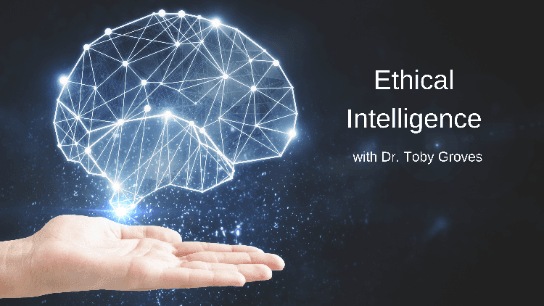
Ethical intelligence is the level of one’s ability to understand, develop and regulate their own ethical reasoning. It includes ability to recognize and interpret ethical elements of a situation, determine best actions, and follow-through on ethical commitments. While emotional intelligence involves the ability to connect with feelings, ethical intelligence focuses on how you interpret your feelings and make decisions from an ethical perspective. The session tackles difficult questions beginning with whether it’s even possible to teach ethics in the first place.
Major Subjects: • How culture affects ethical judgment • The surprising relationship between empathy and ethics • Mindfulness and resilience • Ethical transparency • Ethical fading and bounded ethicality • The neuroscience of ethical information-processing • The psychology behind empathy, transparency and trust
Designed for: Analysts, auditors, governance and compliance professionals, and those working in the IT, HR, legal, and medical professions as well as executives, policymakers and other decision-makers interested in developing a deeper understanding of their own ethical reasoning processes.

Researcher and Speaker
Dr. Toby Groves is a researcher and speaker on social-cognitive psychology that has spent the past decade studying decision-making and culture. He conducts innovative research in the areas of professional skepticism, implicit bias, and decisions under pressure, and uses imaginative audience experiments to demonstrate his concepts.
This portal is provided as a training and development resource for City of Markham employees. Every course is delivered by a qualified subject matter expert or learning organization, is quantifiable in hours, and is verifiable — you receive a documented certificate of completion for every course you finish, stored on LearnFormula indefinitely.
If you hold a professional designation (for example in engineering, accounting, human resources, or law), courses may be counted as professionally relevant, verifiable learning activities toward your continuing professional development. Individual practitioners are responsible for confirming that an activity meets the requirements of their professional body. For questions about the City of Markham's training and development policies, please speak with your people leader or Human Resources.
