This course is the second in a series on key economic indicators.
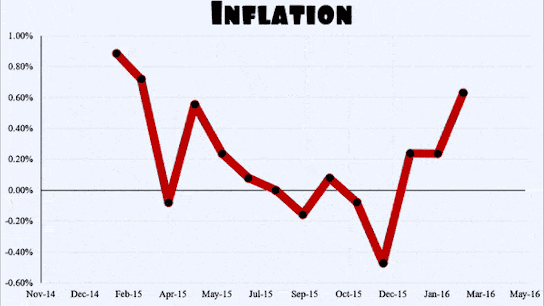
This course is the second in a series on key economic indicators. Students will learn about price indices and inflation. A key objective of this course is to provide CPAs and other business professionals, looking to improve their business acumen toolbox of skills, with a practical overview of how statistical agencies measure changes in the average price level of good and services in an economy over time. We start by learning about simple index numbers and then progress into a discussion of weighted price indices. Specifically, we learn the mechanics of how the Consumer Price Index (CPI) is constructed in the U.S. and Canada. Afterwards, we learn how to put price indices to work by learning how to use them to calculate the inflation rate and how to adjust nominal data series into real series so they can be compared over time. We also discuss the causes and consequences of inflation and hyperinflation. Finally, we cover how and when the official figures are released to the public, their impact on markets, and then reinforce some of the concepts with a short active learning exercise. (Note: All videos in the series are self-contained and can be watched in any order.)

Associate Professor of Economics | King's University College at Western
Dr. Jason Dean is an economics professor and applied economist with experience teaching macroeconomics, microeconomics, labour economics, economic history, public policy, and applied economic topics to university, college, and professional audiences. He holds a PhD in Economics from McGill University, an MA in Economics from the University of Guelph, and an Honours BBA from Wilfrid Laurier University. His academic work focuses on labour markets, immigration, housing, poverty, economic history, and public policy. He has also worked as a health economist and economic research analyst, bringing both academic and applied experience to his teaching. Jason has taught at King’s University College, Wilfrid Laurier University, Sheridan College, McMaster University Continuing Education, McGill University, Kwansei Gakuin University in Japan, Renmin University in Beijing, and Wuhan University of Technology. His courses are built to make economic ideas practical, clear, and useful for real decisions. His peer-reviewed research has appeared in journals including Regional Science and Urban Economics, Cliometrica, Journal of Housing Economics, IZA Journal of Development and Migration, Contemporary Jewry, Journal of International Migration and Integration, International Journal of Social Economics, and health economics journals. His policy work has been published through the Montreal Economic Institute, and he has provided media commentary on labour markets, housing, public policy, immigration, and the Canadian economy. Jason’s CPD courses help professionals understand how economic indicators, policy decisions, inflation, GDP, interest rates, labour markets, and consumer demand connect to business conditions, client decisions, financial planning, and the broader economy. Selected Publications: - “Income Decline, Financial Insecurity, Landlord Screening and Renter Mobility,” Regional Science and Urban Economics, 2022. - “The Linguistic Wage Gap in Québec, 1901 to 1951,” Cliometrica, 2022. - “Sexual Orientation and Homeownership in Canada,” Journal of Housing Economics, 2020. - “Does it Matter if Immigrants Work in Jobs Related to their Education?” IZA Journal of Development and Migration, 2018. - “Labour Market Attainment of Canadian Jews During the First Two Decades of the 20th Century,” Contemporary Jewry, 2017. - “Economic Integration of Pre-WWI Immigrants from the British Isles in the Canadian Labour Market,” Journal of International Migration and Integration, 2016. - “Religiosity and Female Labour Market Attainment in Canada: The Protestant Exception,” International Journal of Social Economics, 2016.
This portal is provided as a training and development resource for City of Markham employees. Every course is delivered by a qualified subject matter expert or learning organization, is quantifiable in hours, and is verifiable — you receive a documented certificate of completion for every course you finish, stored on LearnFormula indefinitely.
If you hold a professional designation (for example in engineering, accounting, human resources, or law), courses may be counted as professionally relevant, verifiable learning activities toward your continuing professional development. Individual practitioners are responsible for confirming that an activity meets the requirements of their professional body. For questions about the City of Markham's training and development policies, please speak with your people leader or Human Resources.
