Implementation
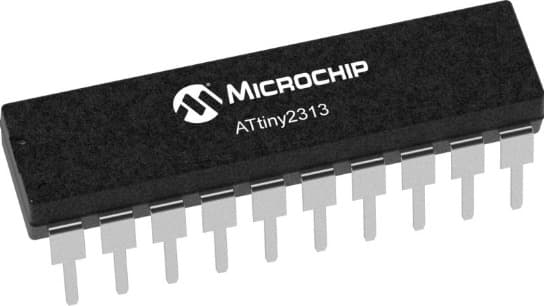
In my course entitled "Microcontrollers: an Introduction" I discussed the architecture of microcontrollers. I showed how the central processing unit fetches instructions (or a program) from memory and decomposes the instructions into components that the control unit and the arithmetic logic unit can use to perform the desired operation or function. Here I will discuss how to design a simple circuit incorporating a microcontroller with a small footprint, small pin count, and a small amount of internal memory (both program and data memory). I will give program examples using the C programming language. Microcontrollers are simply microprocessors that include program and data memory and peripherals such as general-purpose input/output ports, timers, serial communications controllers, analog-to-digital converter, etc.

Mark Strain has over 25 years’ experience in designing and developing embedded systems ranging from precise time and frequency standards, remote monitoring systems, cryptographic communications equipment, and advanced weapon systems for the warfighter. He has designed and developed systems with 8-bit microcontrollers in bare metal systems and systems with complex real time embedded operating systems on 32-bit microprocessors. He is currently a Software Engineering Manager for a large defense contractor. He has a Bachelor of Science degree in Electrical Engineering from the University of Central Florida and a Master of Science degree in Electrical Engineering from the University of South Florida. He is a registered Professional Engineer in the State of Florida. He has written many courses for Professional Engineers for continuing education in the areas of computer engineering and electrical engineering. He enjoys studying cosmology and is a published author of Cosmic Entity: A Timeless Perception of the Universe. He lives in Winter Garden, FL with his wife and two children.
This portal is provided as a training and development resource for City of Markham employees. Every course is delivered by a qualified subject matter expert or learning organization, is quantifiable in hours, and is verifiable — you receive a documented certificate of completion for every course you finish, stored on LearnFormula indefinitely.
If you hold a professional designation (for example in engineering, accounting, human resources, or law), courses may be counted as professionally relevant, verifiable learning activities toward your continuing professional development. Individual practitioners are responsible for confirming that an activity meets the requirements of their professional body. For questions about the City of Markham's training and development policies, please speak with your people leader or Human Resources.
