Practical guidance on reducing mass while protecting stiffness, strength, and manufacturability using topology optimization and simulation-led design.
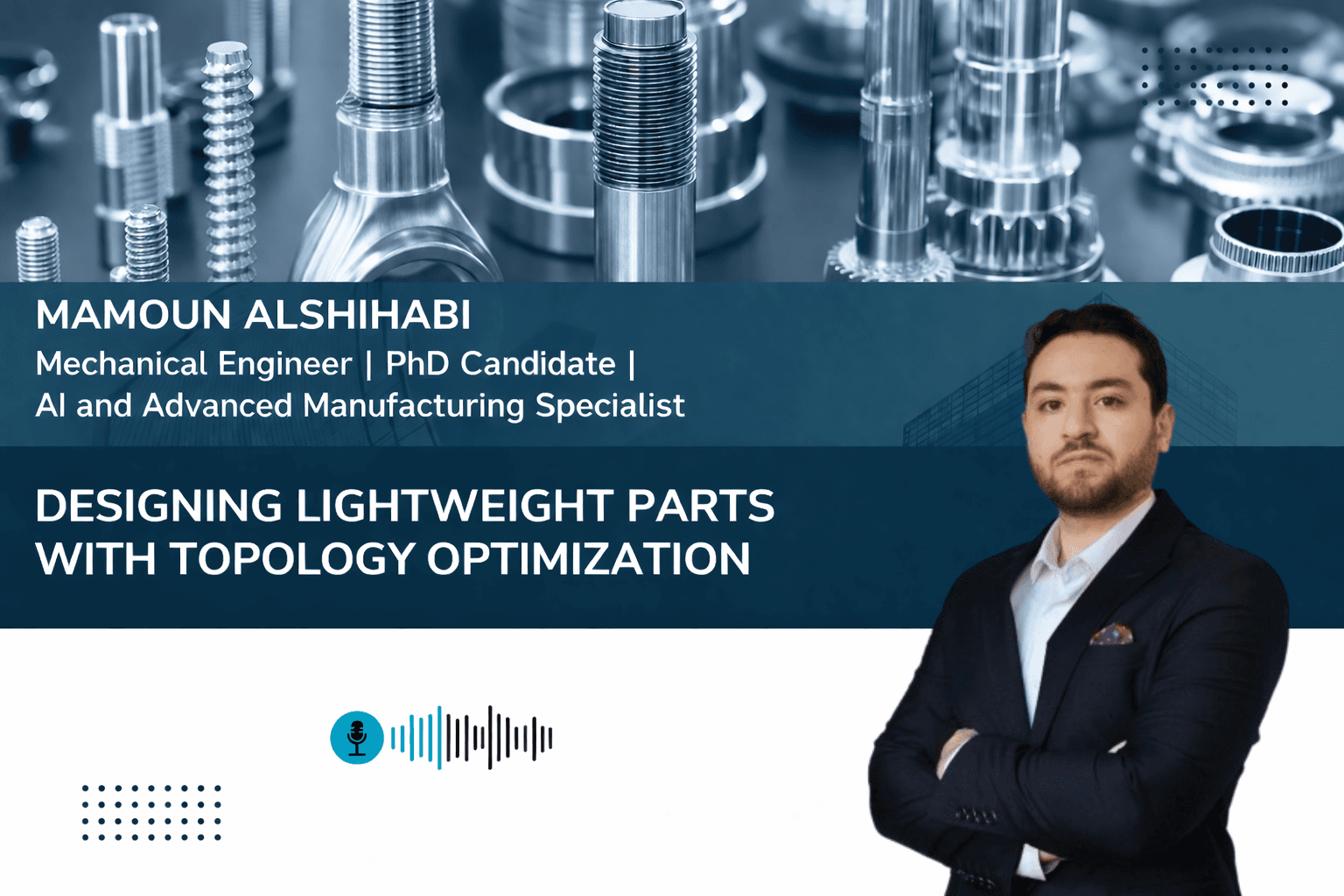
Topology optimization has become a mainstream approach to lightweighting: it redistributes material within a defined design space to create efficient load paths for a given set of loads and constraints. When used well, it can deliver major mass reductions while maintaining stiffness, improving dynamic response, and reducing material use and cost.
This practical webinar is designed for professional engineers in Canada who want to apply topology optimization responsibly in real design programs. We cover an end-to-end workflow: defining the design space, loads, and boundary conditions; selecting objectives and constraints; incorporating manufacturing realities for additive manufacturing and machining; and translating optimization output into CAD geometry that can be verified and released.
The session also emphasizes engineering judgment and risk management: avoiding common modeling errors, validating results with follow-on analysis and targeted testing, and documenting assumptions and limitations to support review and sign-off.

Mechanical Engineer | PhD Candidate | AI and Advanced Manufacturing Specialist
Mamoun Alshihabi is a PhD candidate at the University of Guelph and serves as a teaching assistant, with extensive research experience developed through his work as a research assistant. His expertise includes additive manufacturing, engineering analysis, topology optimization, CAD and CAM software, reverse engineering, and CNC machine programming. Mamoun is committed to advancing his professional career in mechanical and manufacturing engineering and contributes to projects focused on additive manufacturing, part optimization, and engineering analysis.
This portal is provided as a training and development resource for City of Markham employees. Every course is delivered by a qualified subject matter expert or learning organization, is quantifiable in hours, and is verifiable — you receive a documented certificate of completion for every course you finish, stored on LearnFormula indefinitely.
If you hold a professional designation (for example in engineering, accounting, human resources, or law), courses may be counted as professionally relevant, verifiable learning activities toward your continuing professional development. Individual practitioners are responsible for confirming that an activity meets the requirements of their professional body. For questions about the City of Markham's training and development policies, please speak with your people leader or Human Resources.
