LF logo
by learnformula
search
Log in
search
Courses/Engineering/Laws & Rules

Canadian Construction Contracts

Master standard CCDC forms and legal frameworks to mitigate project risks, avoid costly disputes, and secure profitable agreements across the Canadian construction industry.
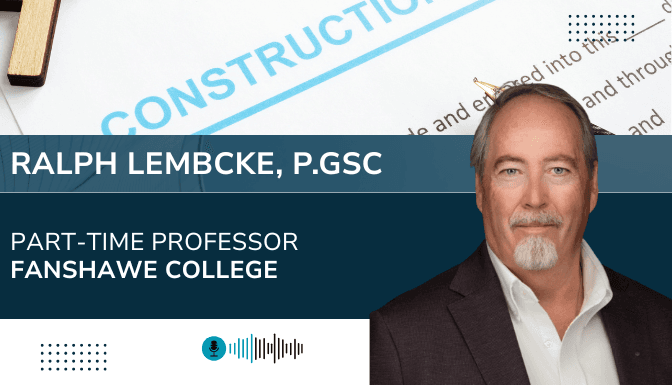
Created byRalph Lembcke, P.GSC
BeginnerUpdated Jun 8, 2026
Canadian Construction Contracts

What You'll Learn

check_circleExplain the purpose and legal foundations of construction contracts and their role across the project lifecycle.
check_circleIdentify key Canadian industry bodies and standard contract frameworks, and understand their influence on project documentation.
check_circleCompare major project delivery models and pricing structures, and assess their impact on risk allocation and project outcomes.
check_circleRecognise common contractual pitfalls in construction projects and apply practical strategies to mitigate risk.

About This Course

Construction contracts form the foundation of every successful project, defining the rights, responsibilities, risks, and expectations of the parties involved. Yet many disputes, delays, and cost overruns can be traced back to misunderstandings of contractual obligations, poorly managed risk allocation, or failures to properly administer contract requirements throughout the project lifecycle.

In this practical session, construction educator and industry veteran Ralph Lembcke provides a high-level overview of Canadian construction contracts, explaining how contracts are formed, the essential elements of enforceable agreements, common project delivery and procurement models, and the contractual mechanisms used to manage scope, risk, payment, and project performance. Through practical examples and industry insights, participants will gain a clearer understanding of how construction contracts operate in practice and how effective contract administration can help reduce disputes and improve project outcomes.

Key Topics Discussed

  • The purpose and role of construction contracts in project delivery
  • Essential elements of a valid and enforceable contract
  • Contract formation: offer, acceptance, and consideration
  • Written versus unwritten agreements and issues of enforceability
  • Common legal concepts affecting contract validity, including misrepresentation, duress, undue influence, and mistake
  • Understanding contractual rights, obligations, and responsibilities
  • Key parties involved in construction contracts and their respective roles
  • Construction procurement methods and project delivery models
  • Contract documents and how they work together to define the agreement
  • Scope of work, project expectations, and performance obligations
  • Risk allocation principles in construction projects
  • Managing contractual risk throughout the project lifecycle
  • Pricing structures and stipulated-price contract considerations
  • Contract administration fundamentals and documentation requirements
  • Change management, variations, and contractual adjustments
  • Common contractual pitfalls and sources of disputes
  • Practical strategies for improving contract compliance and project outcomes
  • Continuing obligations after project completion and limitation period considerations
  • Best practices for contractors, owners, consultants, and project stakeholders
  • Practical lessons learned from real-world construction projects and contract administration experience

Your Instructor

Ralph Lembcke, P.GSC

Part-time Professor | Fanshawe College

menu_book1 courses

Ralph’s construction career has taken him from estimator to project manager, then to self-employed contractor, and finally to a 30-year career as a professor with the Donald J. Smith School of Building Technology at Fanshawe College in London, ON, where he still teaches part-time. He was a 25-year member of the Canadian Institute of Quantity Surveyor (PQS - Professional Quantity Surveyor) and is currently a charter member of the Construction and Design Educators Council of Canada (CDECC). Ralph sits on the board of advisors for the CDECC as well as for an Ontario-based construction company. Ralph holds a certificate in Construction Engineering Technology and Management from Fanshawe College, a teaching certificate from St. Clair College and a Professional Gold Seal certification from the Canadian Construction Association.

Credit Information

Do these courses count toward my professional development requirements?

This portal is provided as a training and development resource for City of Markham employees. Every course is delivered by a qualified subject matter expert or learning organization, is quantifiable in hours, and is verifiable — you receive a documented certificate of completion for every course you finish, stored on LearnFormula indefinitely.

If you hold a professional designation (for example in engineering, accounting, human resources, or law), courses may be counted as professionally relevant, verifiable learning activities toward your continuing professional development. Individual practitioners are responsible for confirming that an activity meets the requirements of their professional body. For questions about the City of Markham's training and development policies, please speak with your people leader or Human Resources.

What Students Are Saying

0.0
Student's Choice
0 reviews

Frequently Asked Questions

We are a registered provider with 327+ associations and regulatory bodies worldwide. We operate across 29 global markets including Canada, the US, Australia, and the UK. Every course page clearly displays its specific accreditations. Upon completion, you receive a professional certificate that can be validated online. Our certificates include all necessary accreditation details, credit hours, and completion dates, and are formatted specifically to meet the submission requirements of most global regulatory bodies.