LF logo
by learnformula
search
Log in
search
Courses/Engineering/Water and Wastewater Treatment

Advanced Concepts in Wastewater Assessment and Treatment

Navigating Complexities for Engineers in Modern Wastewater Management
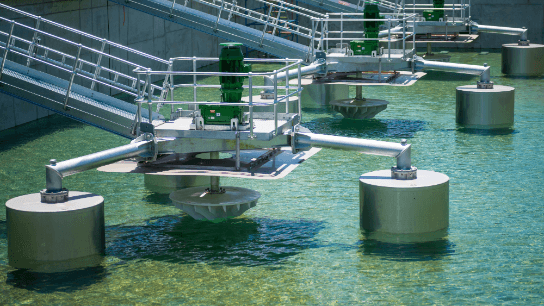
Created byMoe Toghraei, MSc., P.Eng.
4.5
(81 reviews)
AdvancedUpdated Aug 31, 2023
Advanced Concepts in Wastewater Assessment and Treatment

What You'll Learn

check_circleComprehend Physical and Chemical Characteristics: Understand the significance of physical characteristics such as odor, color, density, and viscosity, and analyze their role in initial wastewater assessment. Explore chemical characteristics, including dissolved contaminants, suspended solids, and undetectable compounds.
check_circleNavigate Microbiological Aspects: Grasp the challenges posed by microbiological contaminants in wastewater, including viruses and bacteria, and identify strategies for effective treatment.
check_circleDifferentiate Dissolved and Non-Dissolved Contaminants: Distinguish between dissolved and non-dissolved pollutants in wastewater, understand their sources, and learn about regulatory constraints and removal techniques.
check_circleMaster Water Treatment Stages: Gain insights into preliminary, primary, secondary, and tertiary treatment stages, their processes, and their significance in ensuring water safety.
check_circleExplore Advanced Treatment Methods: Explore advanced treatment methods such as membrane aerated biofilm reactors, alternative approaches to sedimentation, and nitrification/denitrification processes for nutrient removal.
check_circleAnalyze Disinfection Techniques: Evaluate various disinfection methods, including chlorination, ozonation, and UV radiation, and understand their applications in eliminating microorganisms.
check_circleUnderstand Regulatory and Public Perception: Grasp the impact of environmental discharge regulations on wastewater treatment practices and examine the influence of public perception on acceptance of treated wastewater initiatives.
check_circleDesign Efficient Treatment Systems: Apply knowledge of sedimentation tank selection, high compaction clarifying thickeners, and membrane processing to design efficient and sustainable wastewater treatment systems.
check_circleAddress Industrial vs. Municipal Challenges: Contrast challenges faced in treating municipal and industrial wastewater, considering diverse pollutant profiles and treatment priorities.
check_circlePromote Sustainable Water Management: Recognize the role of wastewater treatment in sustainable water management and reclamation efforts, considering cost, quality, and regulatory compliance.

About This Course

This comprehensive course delves into the intricate world of wastewater assessment and treatment, focusing on the crucial role of physical and chemical characteristics in determining water quality and safety. Aimed at engineers seeking to deepen their understanding of wastewater management, the course explores the complexities of microbiological contaminants, dissolved and non-dissolved pollutants, organic and inorganic contaminants, colloids, and more. Through a rigorous examination of treatment stages, biological processes, alternative methods, and regulatory implications, participants will gain the knowledge needed to engineer effective and sustainable wastewater treatment solutions.
Your Instructors

Moe Toghraei, MSc., P.Eng.

Consultant in Water Treatment

menu_book1 courses
star81 reviews

Moe Toghraei, MSc., PEng. has more than 25 years of experience in chemical engineering and more than 10 years as a trainer. He worked in process engineering roles up to lead positions (leading up to 15 process engineers), technical support, and consultant. He has trained more than 500 professionals from more than 25 companies in different technical subjects. He has also developed some courses for colleges. He is an expert in converting complicated concepts to simple components and using daily life analogies for teaching engineering topics. Moe has a Bachelor of Science in Chemical Engineering (1990) and an MSc in Environmental Engineering (1998). He is also a Licensed Professional Engineer.

Darryl Johnson II
Darryl Johnson II

Podcast Host | LearnFormula

Darryl Johnson II is a creative thinker based in sunny Southern California. A prolific content creator, he has published several dozen works for wind band, jazz band, and orchestra and is the author of dozens more print and multimedia publications in both the fiction and non-fiction categories. Along the way, he has delivered academic presentations to hundreds of schools in over 40 states and 3 countries and has received regular laudits for a supportive and relatable approach to education. A composer of music and a composer of words, Darryl Johnson II has developed an insatiable interest in a broad range of concepts and ideas that have been refined by fires of art and strategy and he is passionate about inviting others on new and interesting journeys of thought, experience, and design.

Credit Information

Do these courses count toward my professional development requirements?

This portal is provided as a training and development resource for City of Markham employees. Every course is delivered by a qualified subject matter expert or learning organization, is quantifiable in hours, and is verifiable — you receive a documented certificate of completion for every course you finish, stored on LearnFormula indefinitely.

If you hold a professional designation (for example in engineering, accounting, human resources, or law), courses may be counted as professionally relevant, verifiable learning activities toward your continuing professional development. Individual practitioners are responsible for confirming that an activity meets the requirements of their professional body. For questions about the City of Markham's training and development policies, please speak with your people leader or Human Resources.

What Students Are Saying

4.5
Student's Choice
81 reviews

Frequently Asked Questions

We are a registered provider with 327+ associations and regulatory bodies worldwide. We operate across 29 global markets including Canada, the US, Australia, and the UK. Every course page clearly displays its specific accreditations. Upon completion, you receive a professional certificate that can be validated online. Our certificates include all necessary accreditation details, credit hours, and completion dates, and are formatted specifically to meet the submission requirements of most global regulatory bodies.